From Clutter to Conversation Starter: Rethinking Product Displays
08 Sep, 2026
557 Views 0 Like(s)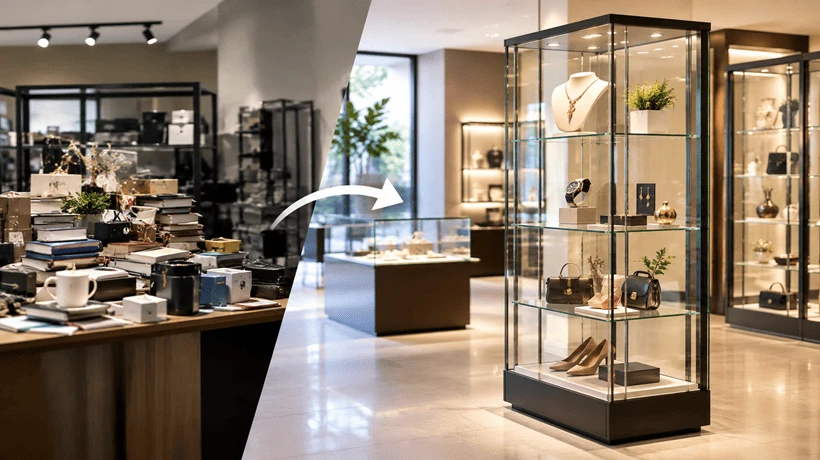
Rethink your product displays to enhance customer interaction. Learn how to turn clutter into conversation starters that drive sales and engagement.
In today’s competitive retail and showroom environments, product presentation can be just as important as the products themselves, honestly. The right display can catch attention, signal quality, and turn an ordinary space into an engaging customer experience. From compact countertop displays and versatile cube display cabinets to stylish LED bulb holders and those elegant mirrored cabinets, modern display solutions give businesses creative options to show products without making the whole area feel visually cluttered.
The main thing is to stop treating displays as merely places to store merchandise. Instead, they should feel more like visual experiences that guide attention, spark curiosity, and nudge customers to interact with what they see. If everything is arranged with care, even a small display can become a real conversation starter.
How Can Countertop Displays Turn Small Spaces Into Attention Zones?
Not every business has a full-sized showroom. So that’s where countertop displays come in and do the work.
Place them on reception desks, checkout counters, sales counters, or any other high-traffic surface, and these compact setups can give a few chosen products a “moment” that feels… noticeable. Like, I actually noticed, even in a place that’s usually crowded.
For instance, a retailer might use a counter display for:
● New or seasonal products
● Small accessories
● Gift items, and yes, even those last-minute ones
● Promotional collections
● Frequently purchased add-ons
● Brand storytelling materials
The trick is restraint. Instead of putting dozens of items up there, you keep a short lineup of what truly deserves the spotlight. A tidy arrangement with varied heights, decent spacing, and the right lighting can make a modest countertop display far more alive than it would on its own.
What Makes Cube Display Cabinets So Versatile?
It’s basically a simple idea, but it hits hard: give each product its own little visual territory.
Instead of lining everything up on one long shelf, cube display cabinets have compartments that split the collection into defined sections. That division creates this rhythm you can see, and it also makes individual items much easier to catch.
They can work especially well for collectibles, cosmetics, electronics, accessories, décor, awards, books, and premium merchandise.
And there’s also that nice flexibility. You can arrange the cubes symmetrically for a polished look or style them asymmetrically if you want something more contemporary. Think of each cube as a miniature stage. What gets the centre scene?
Plus, when you change the contents, swap the background, or adjust the lighting in specific sections, the whole cube display cabinets can feel refreshed without needing a full redesign every time.
How Can LED Bulb Holders Add More Than Just Lighting?
Lighting is one of the simplest ways to change how a display feels; that’s why LED bulb holders can blend useful illumination with decorative flair, especially in places where the lighting itself plays a role in the whole brand look.
LED lighting helps highlight product details, build contrast, and pull attention toward specific spots. It can also make a display look more contemporary and a little more refined in general.
Still, don’t let the lights take over. Aim for the product first, then let the glow behave like it’s supporting it. Try stronger illumination on the “hero” items, and use calmer, softer lighting for the background or the supporting areas.
Placement matters, too. Light hitting from the right angle can add depth and dimension, while lighting that is off by even a little can cause annoying reflections or weird shadows that nobody asked for.
So basically, don’t just light the display; design with light, but in a way that feels intentional.
Why Are Mirrored Cabinets Becoming Popular in Modern Displays?
The positioning of mirrored cabinets adds another strong visual element to product presentation, which is reflection. That “mirror effect” can make displays feel more polished while also visually stretching smaller spaces. And it doesn’t stop there—mirrors can create layers by bouncing back the products, the lighting, and even bits of surrounding décor.
They’re especially good for premium merchandise, beauty products, jewellery, accessories, collectibles, and decorative objects where the presentation is a real part of the perceived value.
The key is to keep everything under control. Too many reflective surfaces together, plus too many products, can make the whole thing feel cluttered, almost chaotic. But a curated arrangement, with a carefully edited selection, can turn into an elegant focal point instead.
How Do You Turn a Display Into a Conversation Starter?
The most memorable glass displays usually give people a reason to stop, and sometimes that reason is tiny but weirdly strong. It might be an unusual product arrangement, or an unexpected mix of materials, maybe a highlighted story, striking lighting, or a really beautiful centrepiece that just sits there like it knows something.
Try building display cabinets around a theme, not just grouping items by category. Like, a seasonal collection can blend products, signage, lighting, and even a few complementary props into one connected visual narrative.
You can also spark curiosity by leaving some negative space near a hero product. Space isn’t wasted space…it just gives key objects room to breathe, instead of feeling shoved in.
Most importantly, update displays regularly. A display that never changes eventually becomes part of the background, and nobody notices it anymore.
What Are the Biggest Product Display Mistakes to Avoid?
Even expensive display furniture can totally miss the mark when the presentation lacks a plan. A lot of common mistakes show up fast, like overcrowding, inconsistent product placement, weak or poor lighting, too much signage, and no clear focal point at all.
Another mistake is treating every product as equally important. If everything is loudly highlighted, then nothing really stands out.
Instead, establish a visual hierarchy. Pick one primary focal point, place supporting products around it, and use spacing, height, colour, and lighting to guide attention step by step.
A strong display should answer a simple question in almost no time: “What should I look at first?”
How Can Businesses Create Displays That People Remember?
Memorable displays start with a plain, clear purpose, not just “put stuff out there". Countertop displays help pull people in for featured products, special deals, or even brand new arrivals, all while keeping things tidy and easy to reach.
If the assortment is bigger, cube display cabinets can work well; they sort items into separate zones so each product gets its own little visual space. That way, the customer can browse without getting that overwhelmed feeling, like the whole setup is just one big blur.
Then there’s lighting, which honestly matters more than people think. Right-installed LED bulb holders can provide focused illumination and bring a crisp, modern vibe, so the items you care about actually stand out, not disappear in the background.
For a more polished look, mirrored cabinets add depth and elegance. They bounce light around, reflect the products, and make the area feel bigger, brighter, and more intentional.
At the end of it all, a good display should do more than simply hold products. It should “tell” something, grab attention, and stay in someone’s mind. When businesses mix smart arrangement with creative presentation, those fixtures stop being just fixtures and turn into a brand experience people remember.



Comments
Login to Comment