Complete Guide to D&C Surgical Instruments for Medical Professionals
04 Feb, 2026
9258 Views 1 Like(s)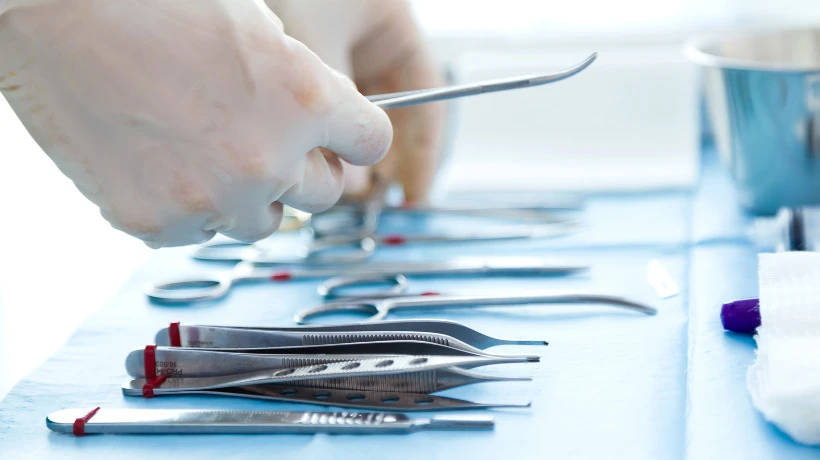
Learn about D&C surgery and its instruments. From speculums to curettes, see how the right tools make procedures safe, simple, and effective for patients.
Introduction to D&C Procedures
What is Dilatation and Curettage (D&C)?
Dilatation and Curettage, or D&C as we usually call it in the clinic, is a common gynecological procedure. It involves gently widening the cervix that's the dilatation part and then scraping or suctioning tissue from inside the uterus the curettage. I've performed hundreds of these over the years, and it's still one of the most straightforward ways to get answers or provide relief for patients.
In simple terms, the doctor opens the cervical canal a little and removes some of the uterine lining. It's quick, often done in an outpatient setting, and most women go home the same day. We use it both to diagnose problems and to treat them.
Purpose and Benefits of D&C in Healthcare
The main reasons we do a D&C are to figure out why a patient has abnormal bleeding, heavy periods, or bleeding after menopause. It helps us check for things like endometrial cancer, polyps, or hormonal issues by sending the tissue to the lab.
On the treatment side, it's great for removing leftover tissue after a miscarriage, ending an early pregnancy if that's the choice, or taking out small growths. The benefits are clear – it's minimally invasive, has a fast recovery, and gives accurate results. In my experience, patients feel much better knowing exactly what's going on, and many say their symptoms improve right away.
Historical Background of D&C Procedures
The D&C procedure goes back to the 1800s. A French doctor named Joseph Récamier first introduced the curette in the 1840s to scrape the uterus gently. Before that, doctors used sponges or fingers, which wasn't safe or effective.
By the late 19th century, metal dilators and better curettes made it more common. Anesthesia improvements in the 20th century made it easier on patients. Today, we often combine it with hysteroscopy for even better views, but the basic idea remains the same. It's amazing how this simple technique has helped so many women for over 150 years.
Understanding D&C Surgical Instruments
Importance of Using Proper Instruments
In any surgery, but especially in dilatation and curettage, the right tools make all the difference. Good surgical instruments help us work precisely, reduce risks like perforation or infection, and make the procedure smoother for the patient.
I've seen cases where cheap or worn-out tools caused unnecessary complications. High-quality stainless steel instruments that fit well in your hand let you feel what's happening inside. They protect delicate tissues and give better outcomes.
How D&C Instruments Aid in Patient Care
These tools work together like a team. Speculums give us a clear view, dilators open the way gently, tenaculums hold everything steady, and curettes remove tissue carefully. Sponge forceps help control bleeding, and needle holders are ready if we need a stitch.
In my practice, using the proper set means less time under anesthesia, fewer complications, and happier patients. It's about safety and comfort – the instruments help us do the job with minimal trauma.
Essential Dilatation and Curettage Surgical Instruments
A standard D&C set has specific tools, each with its own job. Over the years, I've relied on these day in and day out. Here's a closer look at the essentials.
Knife Handle
The Knife Handle (usually #3 or #7) holds scalpel blades. In most D&C procedures, we don't need it for cutting skin since it's vaginal. But it's handy if there's a small episiotomy or if we're combining with another procedure. It's simple, lightweight, and easy to grip.
Backhaus Towel Clamp
Backhaus Towel Clamps are those sharp, pointed clamps we use to secure surgical drapes. They pierce the drape and skin just enough to hold everything in place without slipping. In D&C, we use several to create a sterile field. They're strong and reliable – I always check they're sharp enough to grab but not too aggressive.
Dressing Forceps
Basic Dressing Forceps help handle gauze, clean the area, or hold tissue gently. They're straight or slightly curved with serrated tips. In D&C, we use them for prepping the vagina or placing packing. Nothing fancy, but you can't do without them.
Graves Vaginal Speculum
The Graves Vaginal Speculum is my go-to for most adult patients. It has wide, curved blades that open the vagina nicely to see the cervix clearly. The ratchet locks it in place, freeing your hands. It's larger than the Pederson type, perfect for women who've had children. Great visibility makes the whole procedure easier.
Jackson Vaginal Retractor
The Jackson Vaginal Retractor is a blunt blade retractor for pulling back vaginal walls, especially the side ones. It comes in small and medium sizes. We use it along with the speculum for better exposure during dilatation or curettage. Gentle on tissue and easy to maneuver.
Hegar Uterine Dilator Double Ended
Hegar Uterine Dilators are double-ended metal rods with gradual sizes (from 1-2mm up to 17-18mm). They're slightly curved and smooth for gentle cervical dilatation. In D&C, we start small and work up to avoid tears. They're essential for safe access to the uterus – I've always appreciated how progressively they open the canal.
Bozeman Uterine Dressing Forceps
The Bozeman Uterine Dressing Forceps are long, curved, and have serrated tips for packing gauze into the uterus or removing tissue. The double curve helps reach deep without blocking your view. Useful after curettage to place packing if needed for bleeding control.
Schroeder Uterine Tenaculum Forceps
Schroeder Uterine Tenaculum Forceps have single teeth for grasping the cervix firmly to steady it during dilatation. They're straight and ratcheted. In D&C, this traction straightens the cervical canal – makes dilating much easier and safer.
Sims Uterine Curette Sharp Malleable Shaft
The Sims Uterine Curette with its sharp loop and malleable shaft is perfect for scraping the uterine walls. You can bend the shaft slightly to fit the uterus shape. Sizes vary, and the sharp edge removes tissue effectively but carefully. Classic tool for the curettage part.
Simpson Uterine Sound Silver Plated Graduated
The Simpson Uterine Sound is a graduated probe to measure uterine depth before starting. Silver-plated for smoothness, marked in centimeters. It helps avoid perforation by telling you exactly how deep the cavity is. I always use it first – better safe than sorry.
Foerster Sponge Forceps
Foerster Sponge Forceps have ring tips with serrations to hold sponges or gauze securely. Curved or straight, they're great for cleaning the field or applying pressure to stop minor bleeding during D&C. Long enough to reach comfortably.
Heaney Needle Holder
The Heaney Needle Holder is curved with serrated jaws, designed for vaginal surgery. We use it if any suturing is needed, like closing the cervix or repairing a small tear. Tungsten carbide inserts give a strong grip on needles.
Auvard Weighted Vaginal Speculum
The Auvard Weighted Vaginal Speculum has a weight that holds it in place to retract the posterior vaginal wall. No need for an assistant to hold it. Excellent for longer procedures or when you need both hands free.
Jacobs Vulsellum Forceps
Jacobs Vulsellum Forceps have multiple teeth for strong grasp on the cervix, especially if it's tough or scarred. More aggressive than the Schroeder, so we use it when extra hold is needed.
Key Characteristics of D&C Instruments
Material and Quality Considerations
Most D&C instruments are made from high-grade stainless steel – durable, rust-resistant, and easy to sterilize. German or Japanese steel is top quality in my experience. Look for smooth finishes to prevent tissue sticking.
Design and Ergonomics
Good handles with finger rings reduce hand fatigue. Ratchets should lock smoothly. Curved designs follow anatomy naturally. Ergonomic tools mean better control and fewer mistakes.
Choosing the Right Instrument for Procedures
Pick based on patient size, parity, and procedure type. For example, Graves speculum for most adults, Hegar dilators for standard dilatation. Always have a full set ready – you never know what you'll need.
Proper Handling and Sterilization of D&C Instruments
Cleaning and Disinfection Protocols
Right after use, rinse off blood and tissue. Then soak in enzymatic cleaner. Ultrasonic cleaning works well for joints. Scrub carefully by hand if needed.
Sterilization Methods for Surgical Safety
Autoclaving is standard – steam under pressure kills everything. Some use chemical sterilization for delicate items. Always follow hospital protocols to prevent infections.
Storage Best Practices
Store in protective trays, dry and organized. Avoid stacking heavy items on top to prevent bending. Regular checks for damage keep everything ready.
Common Challenges with D&C Instrumentation
Instrument Malfunction or Damage
Dull curettes or sticky ratchets can slow things down or cause injury. Regular maintenance prevents this.
Patient Safety Concerns
Risks include perforation from forceful dilatation or infection from poor sterilization. Always go slow and gentle.
Solutions and Preventive Measures
Train staff well, inspect instruments before each case, and replace worn ones promptly. Good technique and quality tools solve most problems.
Conclusion
D&C surgical instruments are the backbone of this reliable procedure. From the trusty Graves speculum to the precise Sims curette, each plays a vital role in safe, effective care. In my career, I've seen how the right tools make all the difference for patient outcomes. Take time to learn them well and your patients will thank you.
References
-
Berek, J. S.
Berek & Novak’s Gynecology, 16th Edition.
Lippincott Williams & Wilkins, 2019.
Standard gynecology textbook detailing D&C indications, technique, and instrumentation. -
Hacker, N. F., Gambone, J. C., Hobel, C. J.
Hacker & Moore’s Essentials of Obstetrics and Gynecology, 6th Edition.
Elsevier, 2015.
Covers dilatation and curettage procedures and perioperative considerations. -
American College of Obstetricians and Gynecologists (ACOG)
Practice Bulletin: Management of Abnormal Uterine Bleeding.
ACOG Official Guidelines.
Authoritative clinical guidance on diagnostic and therapeutic use of D&C. -
World Health Organization (WHO)
Clinical Practice Handbook for Safe Abortion.
WHO Press.
Includes D&C and suction curettage techniques, safety, and instrument use. -
Cunningham, F. G., et al.
Williams Gynecology, 4th Edition.
McGraw-Hill Education, 2020.
Detailed discussion of uterine instrumentation and gynecologic procedures. -
Wikipedia
"Dilation and Curettage".
General overview, history, indications, and modern practice (used for background reference). -
Wikipedia
"Gynecological Surgical Instruments".
General classification and descriptions of instruments such as curettes, specula, dilators, and forceps. -
MedlinePlus – U.S. National Library of Medicine
Dilation and Curettage.
Trusted patient-care and procedural overview resource. -
Johns Hopkins Medicine
Dilation and Curettage (D&C).
Clinical explanation of procedure, benefits, risks, and recovery. -
Cleveland Clinic
Dilation and Curettage (D&C).
Authoritative patient and clinician resource explaining indications and outcomes. -
GerMedUSA – Surgical Instruments Manufacturer & Supplier
GerMedUSA Inc. is a globally recognized manufacturer and supplier of high‑quality surgical instruments. The company follows strict FDA guidelines and holds ISO 13485:2016 certification for quality management systems in medical device manufacturing.
(“Dilation and Curettage Set “)



Comments
Login to Comment