AQI Explained: How Pollution Cuts 5 Years Off Your Life (And What to Do)
26 Nov, 2025
10166 Views 3 Like(s)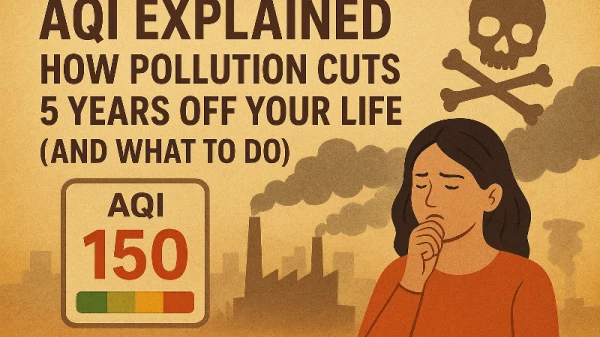
Delhi’s air pollution during Diwali 2025 hit some of the worst levels in four years, with the AQI soaring into the "very poor" and "severe" categories due to heavy firecracker use and stagnant weather. PM2.5 levels spiked dangerously, affecting millions and causing acute health risks. Despite some improvements from stricter regulations compared to previous years, Delhi’s air remains alarmingly toxic post-Diwali, highlighting the urgent need for sustainable pollution controls
If the air you breathe could silently erase years from your life, would you still ignore that AQI number on your phone? Recent studies show that air pollution is now one of the biggest threats to human health, reducing life expectancy by several years in many parts of India, especially in cities like Delhi. Understanding the Air Quality Index (AQI) is the first step to fighting back.
What AQI Actually Means
The Air Quality Index is a simple scale that translates complex pollution data into a single number from 0 to 500, grouped into colour-coded categories from “Good” to “Hazardous”. An AQI below 50 usually means clean air, while anything above 100 signals health risks, especially for vulnerable groups. As the number rises above 200, the air becomes unhealthy for everyone, and values beyond 300 indicate emergency-level, hazardous conditions.
In India, national AQI categories like “Moderate,” “Poor,” “Very Poor,” and “Severe” are based mainly on pollutants such as PM2.5, PM10, nitrogen dioxide, sulphur dioxide, ozone, and carbon monoxide. PM2.5—tiny particles smaller than 2.5 micrometres—is the most dangerous, because it slips deep into the lungs and even into the bloodstream.
How Pollution Steals 5 Years of Your Life
So how does a number on a screen translate into lost years of life? Long-term exposure to high PM2.5 levels damages almost every system in the body, increasing the risk of heart disease, stroke, lung cancer, COPD, and even diabetes. The World Health Organization notes that most deaths linked to outdoor air pollution are due to heart and brain diseases, not just lung problems.
The Air Quality Life Index (AQLI), developed by the University of Chicago, turns pollution levels into life expectancy impact. According to the latest AQLI-based analyses, air pollution is cutting the average Indian’s life expectancy by about 3.5 to 5 years compared with a scenario where WHO’s clean-air guideline is met. In northern India’s Indo-Gangetic plains, people could live around 5 or more extra years if PM2.5 levels met global standards. For residents of Delhi-NCR, some reports estimate a shocking 8+ years of life lost due to consistently extreme pollution levels.
In simple words: each day of breathing toxic air nudges your body toward chronic disease faster than it should. Over decades, that adds up to years shaved off your lifespan.
Why AQI Spikes Matter, Not Just Averages
You might think, “If life expectancy is about long-term exposure, why worry about a few bad days?” The problem is that short-term spikes—for example, during winter smog or post-Diwali days—trigger immediate health stress while also adding to long-term damage. Severe AQI days (above 400) lead to:
Sudden increases in hospital visits for asthma, breathlessness, and chest pain.
Worsening of existing heart and lung conditions.
Experts in Delhi recently called the city’s air “life-threatening” after multiple days in the “Severe” category, highlighting clear evidence that toxic air is directly linked to reduced life expectancy. Even if you are young and “healthy,” your lungs and blood vessels are silently paying the price.
How to Read AQI Like a Pro
To protect yourself, treat AQI like a daily health forecast, not just a number. Most AQI apps classify air like this:
0–50: Good – Safe for outdoor activity.
51–100: Moderate – Mostly safe; sensitive people take care.
101–200: Unhealthy for sensitive groups/unhealthy – Reduce strenuous outdoor exercise.
201–300: Very Unhealthy – Avoid outdoor exertion; vulnerable groups stay indoors.
301–500: Hazardous – Public health emergency; stay indoors as much as possible.
Check AQI in your neighbourhood, not just the city average, because hotspots like busy roads or industrial zones can be far worse than overall numbers suggest. Build the habit of checking AQI in the morning just like checking the weather.
What Pollution Does Inside Your Body
Think of PM2.5 as microscopic shards of dust coated with toxic chemicals. When you inhale them, they lodge deep inside the lungs and trigger inflammation. Over time, this inflammation:
Thickens blood vessels, raising blood pressure and heart disease risk.
Damages lung tissue, reducing lung capacity and causing chronic breathing problems.
Increases the risk of stroke, heart attacks, and some cancers.
Studies show that a modest rise in long-term PM2.5 is linked to double-digit increases in deaths from heart and brain diseases. That is why air pollution now rivals or exceeds smoking, malnutrition, and unsafe water as a health risk in India.
What You Can Do Today: Personal Protection
You cannot control the city’s emissions overnight, but you can significantly cut your own exposure. Research and health advisories suggest several effective steps:
Wear the right mask
Use a properly fitted N95 or similar respirator when AQI is above 150, especially if you commute or walk outdoors. Cloth or surgical masks do not filter PM2.5 efficiently.Optimise your indoor air
Keep windows closed during “Very Unhealthy” and “Hazardous” periods, and ventilate only when AQI improves.
Use an air purifier with a HEPA filter in the room where you sleep or spend most of your time.
Mop floors and wipe surfaces with a damp cloth to reduce dust instead of dry sweeping.
Time your outdoor routine
Plan walks, workouts, or kids’ playtime during hours or days when AQI is lower, like after rain or on windy days. On severe days, move workouts indoors—yoga, bodyweight exercises, or treadmill sessions are far better than running in toxic smog.Support your body with nutrition
Doctors and nutrition experts recommend antioxidant-rich foods to counter some of the inflammation triggered by pollution. Include:
Colourful fruits and vegetables (berries, citrus, carrots, spinach).
Nuts and seeds (almonds, walnuts, sunflower seeds).
Spices like turmeric and ginger, and herbs like tulsi.
While diet cannot “detox” all pollutants, it helps your immune and cardiovascular systems cope better.
Protect vulnerable family members
Children, the elderly, pregnant women, and people with asthma or heart disease are at higher risk. Ensure they:
Avoid strenuous activity when AQI is high.
Have medications and inhalers accessible.
Spend more time in cleaner indoor spaces during severe days.
How You Can Help Change the Bigger Picture
Personal protection is essential, but the real victory comes from cleaner air for everyone. The same AQLI reports that warn of lost years also show that meeting national or WHO standards could give Indians back several years of life expectancy. You can contribute by:
Reducing car use: carpool, use public transport, or switch to walking/cycling on better AQI days.
Supporting clean energy and stricter emission norms through your votes, petitions, and local campaigns.
Saying no to open waste burning and unnecessary firecrackers, and encouraging your community to do the same.
Each policy that cuts PM2.5 is effectively adding months or years to millions of lives.
When you look at AQI now, do not see it as just another statistic. See it as a countdown clock on your life—and a powerful tool to reclaim those stolen years by changing your habits, protecting your loved ones, and demanding cleaner air for your city.



Comments
Login to Comment